
- Narrow banding rolls used to bundle small packages manually, and with orbital wrappers. Common sizes are 2”, 3”, 4” 5” and 6”.
- Hand wrap rolls are used by customers with a multitude of stock pickers. The operator walks around the pallet while wrapping the film. As the film is applied under tension, it is stretched around the pallet creating the effect of a giant rubber band. Common widths for hand wrap rolls include 11”, 12”, 13”, 14”, 15” 16”, 17” and 18”.
- When the volume of pallet wrapping becomes tedious to be wrapped by hand, customers purchase automatic stretch wrappers to wrap their pallets.
As packaging salespeople, we often meet with customers that inadvertently refer to stretch film as shrink film. So what’s the difference?
In general, Shrink Films are designed to enhance the packaging of products such as multipacks, frozen pizza, games, consumer products, gifts and DVDs to mention a few.
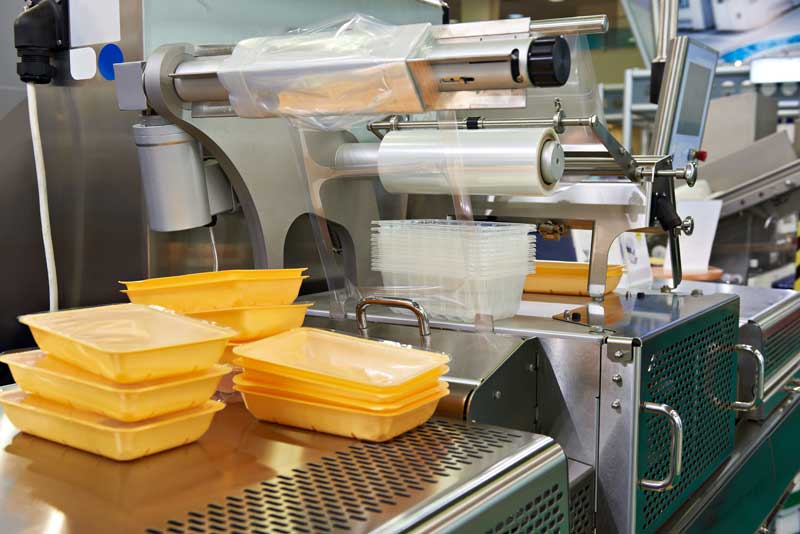
The shrink process starts with creating a film pouch around the product with a Sealer and then introduced into a heat tunnel. Heat causes the film to shrink around the product. Shrink films are engineered to work with a wide variety of shrink equipment and sealing systems. Films are produced in various thicknesses, with different clarity, shrink and sealing characteristics. Select a film suitable for the product and equipment, and confirm any application-specific requirements with the supplier.
Stretch Films, on the other hand, are mostly used to unitize pallets of goods. Stretch film doesn’t require heat to be activated.
The stretch film is offered in three basic forms:
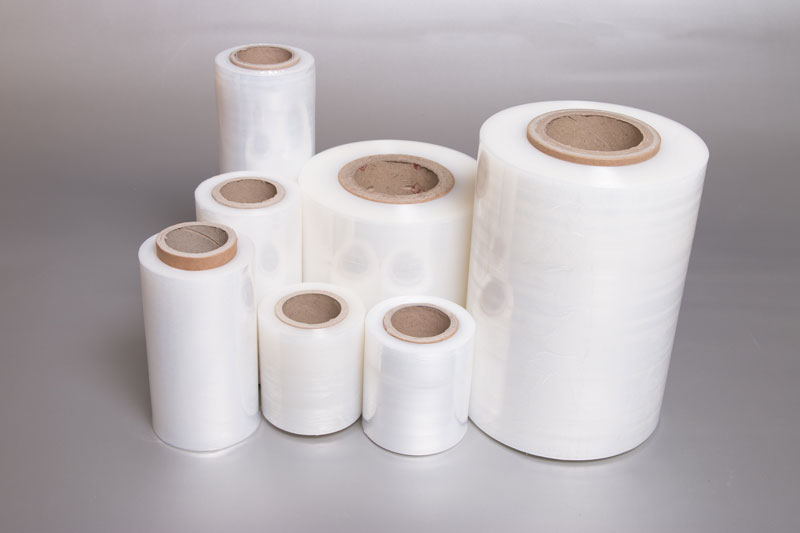
The pallet is placed on a turntable and a predetermined number of wraps, overlapping speed and tension are applied to the pallets as it rotates on the turntable to secure the load. Common machine widths are 20”, 30” and to a lesser extent 40”, 50”, 60”, 70” and 80”.
Stretch film, whether for banding, hand rolls or machine rolls, is manufactured in various thicknesses for the various pallet weights and shapes.
When stretch film was originally introduced as an alternative to steel, polypropylene and polyester strapping, the most common thicknesses ranged from 80 to 150 gauge. The introduction of film allowed the users to encase their entire load, helping contain the products together. Load protection still depends on the film, wrapping process and distribution conditions.
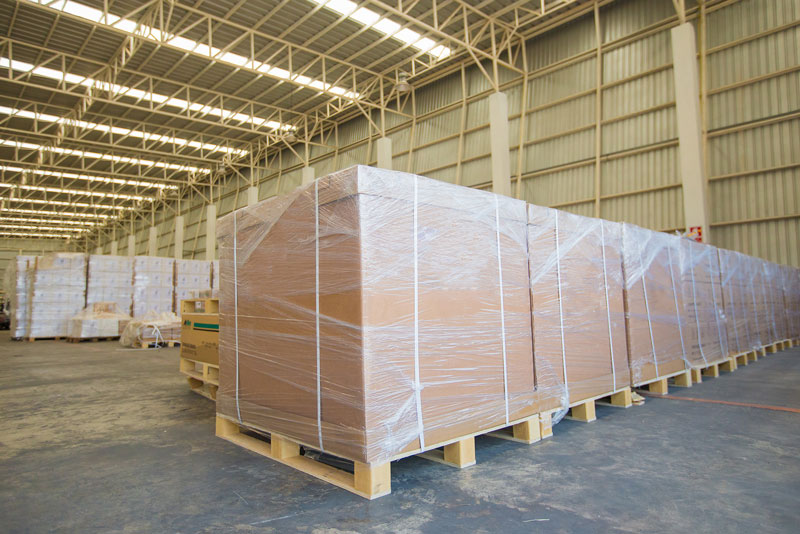
More recently, with the availability of superior resins and extrusion technology, new high performance films are produced in very popular, new thinner gauges ranging from 51 to 24 gauge. These new generation films exhibit excellent clarity, cling and stretch that allows customers to use the thinnest films without sacrificing the load integrity. Many of these new high performance films are capable of yielding 200-300% stretch because of the new features and advances incorporated in today’s resins and stretch wrappers.
The films are pre-stretched prior to being applied to the sides of the pallets allowing customers to benefit greatly from much higher yields, which translates into lower cost per load. The savings, in many cases, result in justifying the purchase of new, more sophisticated equipment, because of the short ROI.
Pacific Packaging Products, a leading packaging materials distributor and converter, offers all the films and gauges in standard widths and sizes. In addition, because of our converting capabilities, we can provide our customers with custom widths and lengths, as well as printed logos and messages, if needed.
Contact our Pacific rep to discuss your stretch and shrink film requirements. We’ll be happy to demonstrate the latest offering in both films.
Contact Pacific
Tell us about your packaging needs.